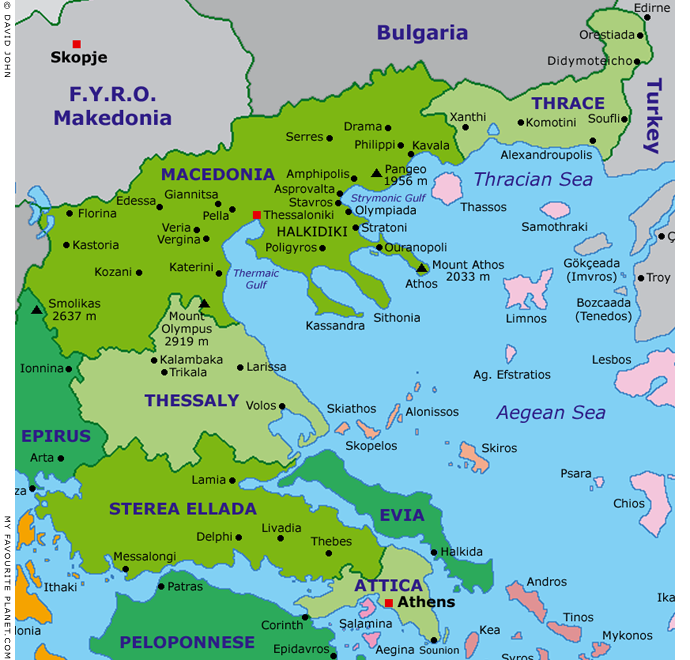
Though Veria has been an important settlement since ancient times, the Roman statesman Cicero (100-43 BC) referred to it as an "out-of-the-way town" because of its distance from Thessaloniki (68 km) and the Roman Via Egnatia.

Today, despite being close to a throbbing motorway, it remains a small, neat provincial town amongst the hilly farmland of central Macedonia, with a view across the the broad plain below. It is supposed to have a population of over 38,000, but it's difficult to see how that many inhabitants could fit in here; it only takes about 20 minutes to walk from one end of town to the other.
20 minutes is also all it takes to drive to the ancient Macedonian capital
Aigai (today known as Vergina, see
Pella). Veria is the capital of Imathía prefecture and a hub for visitors to other historical sites as well as hikers, climbers and skiers.
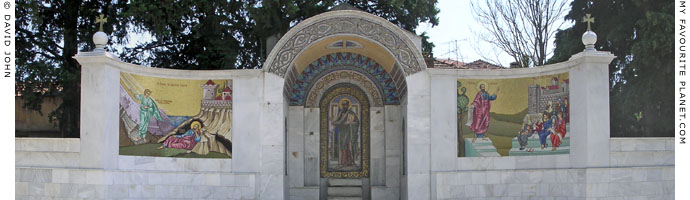
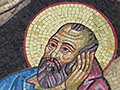
Saint Paul the Apostle preached in Veria on his evangelical tour of Macedonia (around 49-51 AD) and found a very receptive audience. A grand outdoor marble and mosaic monument to his visit of has been built on the Víma, the square where he preached, at the edge of the town (see
next page and
gallery photos 1-4).
One of the main mosaics depicts Paul's "Macedonian vision" (
gallery photo 2), a scene found in many churches in Macedonia.
Downtown has a couple of main streets lined with smart shops, cafés and offices full of well-dressed young people. Pleasant but unremarkable. As ever, it's when you go behind this modern veneer and explore the side streets and alleys that things get interesting.
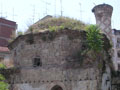
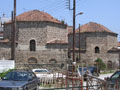
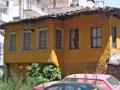
As so often in Greece, one comes across the widespread ambivalence to its own history and heritage. Ancient mosques, churches and houses have been left to decay.
During the five centuries of Turkish occupation, churches were disguised as barns and warehouses. There are said to be 48 (or 51) of these, which explains Veria's epithet "Little Jerusalem". But the stories of disguise seem odd, as you only have to walk past one and peer into a window to see the magnificant frescoes or smell the incense. It it is impossible not to conclude that there must have been a degree of collusion or laissez-faire between the local Greek and Turkish populations. This was certainly not always the case, and the Turkish authorities were known to inflict vicious retribution, such as the hanging of the archbishop in 1436.
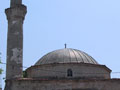
Macedonia only became part of modern in Greece in 1912 after the Balkan Wars. Despite the ancient emnities between Greeks and Turks, it is surprising that in many Greek towns the old mosques (and sometimes even hamams and medresas) were not simply torn down or converted into churches.
Older Greek people have told me of the sadness caused by the enforced exchanges of Greek and Turkish poulations over the century following Greece's independence. The loss of Turks must have left quite a hole in many smaller communities. I also met an elderly couple in Turkey who had been forced out of Crete. They still spoke Greek and felt considerable nostalgia for their home.
Very few people mourn the loss of the Ottoman empire which oppressed just about everybody, but centuries of shared culture, especially amongst the poor, have laid deep roots which politics have not managed to erase.
This may help explain why many old Ottoman mosques and hamams have not been demolished to make way for supermarkets or hotels. But what to do with them? All over Greece Muslim buildings, some very fine architecturally, slowly rot. Of course this is also true of churches and other buildings. Unfortunately, there is neither the means nor the political will to do anything about it.
Likewise, until recently, a synagogue in Veria lay neglected since the 1940s. Now an international fund is planning to renovate it. The Jews had thriving communities in Macedonia from classical times (synagogue is a Greek word meaning coming together). This all ended abruptly when the Nazis invaded and deported them to the concentration camps, including over 800 from Veria.
See:
www.isjm.org/jhr/nos3-4/veroia.htm
Since first writing the articles in this guide to Veria in 2004, there have been many changes in the city, including the restoration of several old buildings, particularly in the old Jewish quarter Babouta. We hope to be able to update our impressions of the city in the near future.